
Why I Write Like an Athlete
How you do anything is how you do everything.

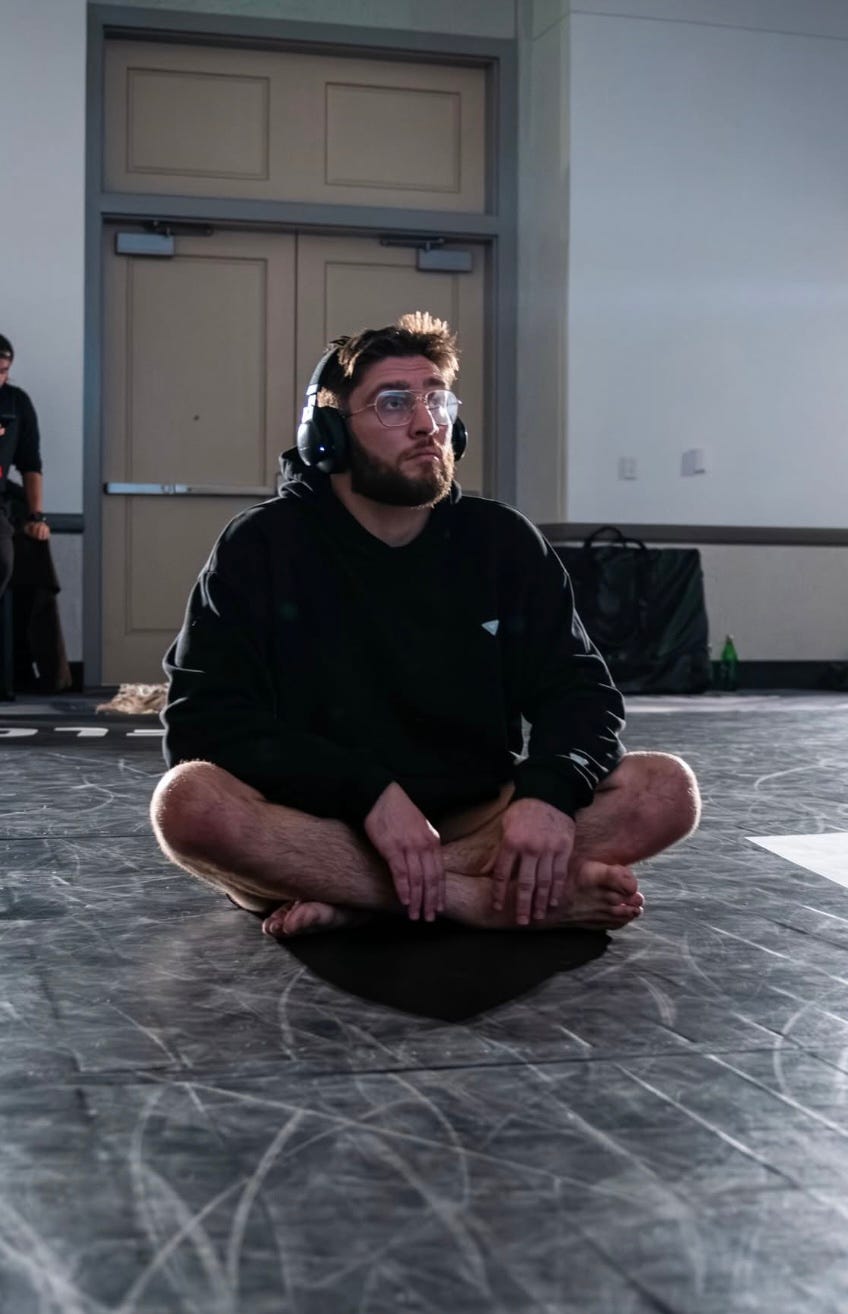
I’ve always viewed my writing practice as an extension not just of myself, but of my athletic career.
They say how you do anything is how you do everything, and I guess for me, that means I do anything and everything like an athlete.
In the beginning, I think this was because I thought my athletic dreams were fading into the abyss. I thought a day was going to come soon at the time when I wouldn’t be able to play sports anymore, either due to physical or financial reasons.
I’ve since learned this is not the case, but the impact that sports have had on my writing is undeniable.
Creative work is hard, it’s not always fun, and it can make your life very unpredictable. Funny enough, sports are the same way.
But within that madness, what we as writers (and athletes) need to find is direction.
Writing like an athlete is about discipline. It’s about focus. It’s about goal-setting.
This is my approach to viewing creativity through the lens of high-performance.
It makes no difference what you feel like.
Some days, I show up to the gym eager to train. I greet everyone with a smile. Sometimes, my introverted self can even be extroverted at Jiu-Jitsu practice or in the weight room.
Other days are not so nice. My body feels heavy. Things hurt. My body gives me the subtle reminder that I won’t be able to train and compete forever.
Writing is the same way. I have good days and bad days. I’m writing this article on a bit of a bad day, to be honest. I am in the middle of a journey from Austin to Baltimore that forced me to wake up at 4 in the morning.
But on the good days and the bad days, it doesn’t matter what you feel like. It matters that you show up. Put in the reps. Go through the motions. You can vary your intensity, you can have light days, and you can even schedule breaks, but you cannot fail to keep the promises that you make to yourself.
A book doesn’t get written without showing up every day for months on end. Some of those days will be good and others likely not so much.
It makes no difference what you feel like.
This is principle 1.
Writers, just like athletes, must train.
The publishing of an article, book, or product is like competing.
It’s a measurable activity where you will either succeed, fail, or end up somewhere in between.
Sure, not all flops are failures and not all bestsellers are successes, but the same is true in sport. A win where you perform like crap is not going to make you as proud as a loss where you perform excellently.
The iterations, reps, and edits that happen in the process of sharing the work are the “training”, but there’s more to it than just showing up. In Jiu-Jitsu, I go to practice yes, but I also have strength training work, I do my cardio work, and I have my recovery sessions.
For a writer, this might look like:
Writing draft 1
Editing
Reading
Listening to a lecture
Going for walks
Talking to interesting people
Journaling
The practice of “being a writer” is not just sharing finished work. That is but a brief moment in your existence.
So, really, there are 2 lessons here.
First, you can’t just love publishing work that people love if you want to be a writer. That alone won’t sustain you. It’s the 7 things that I have listed above (or whatever other iterations of them you find) that are going to really sustain you for the long haul of the writer’s life.
And the second lesson is that there is a lot of supplemental work that must be done to make you better at writing. The practice of putting words on a blank page is just one of the many components of great writing. To be a good writer, you must be a student of the craft.
Writers must be resilient.
I don’t think I’ve ever been a natural at anything in my life.
In my first year of wrestling, I won just 4 matches and lost 14. In my second year, when most young athletes start to make improvements, I got worse. I finished with 4 wins and 28 losses. It wasn’t until year 4 that I really started to make strides, and by then it was too late for me to contend at the higher levels of wrestling.
In BJJ, I didn’t have crazy early success either. I won a few white belt competitions because of my wrestling background, but I also lost a lot. In my first year at blue belt in BJJ, I lost most of my matches. It took about 4 years of obsessive training for me to start competing at a high level and about a decade to really make a living doing it.
When I first started writing, I didn’t immediately blow up either. I didn’t share a couple of articles online and have Penguin Random House at my door offering me a multi-million dollar book deal.
Instead, I have gradually experimented and built my writing career over the last 5 years. The article you’re reading now is one of close to 2000 that I have written, not to mention tweets, Quora answers, and other short-form posts.
But luckily, I am stubborn.
And if you want to write, you need to cultivate some stubbornness too. We ought to flatter ourselves a bit and call it resilience.
You need those long nights where you sit by yourself at your keyboard, wondering what the hell you’re doing. You need to push yourself. The feeling of being lost and full of doubt is a part of the journey for everyone, regardless of level.
My goal for you is just that you’re able to reach your goals in writing with a little less confusion than I had.
Closing Thoughts
Whether your goal is to make buckets of cash with your writing, build an audience, or finally finish your debut novel, the foundation of all writing is to have the qualities of an elite athlete.
Stephen King is known to write 2500+ words every single day when working on a novel with no days off. Most elite writers have similar word counts (or even higher). This is like their “training camp”.
When I prepare to compete in Jiu-Jitsu, I build a camp for myself. I follow specific training routines, I modify my diet, and I take my work off the mat seriously.
And when I am working on a book, building a new project, or looking to take my writing to the next level, I do the same thing - just the writing equivalent. I read specific books that will help me. I go for more walks. I triple down on my journaling. I live the writing “training camp” lifestyle.
Writers, just like athletes, need concentrated training blocks.
Stop being a tortured artist.
Write like an athlete.
Thanks for reading another edition of The Modern Writer!
If you liked this post, share it with friends! Or, give it a ❤️ so that more people can discover it on Substack :)
I’ll see you next Wednesday!