
Why Writing Makes You Crazy
Does great writing really come from pain?

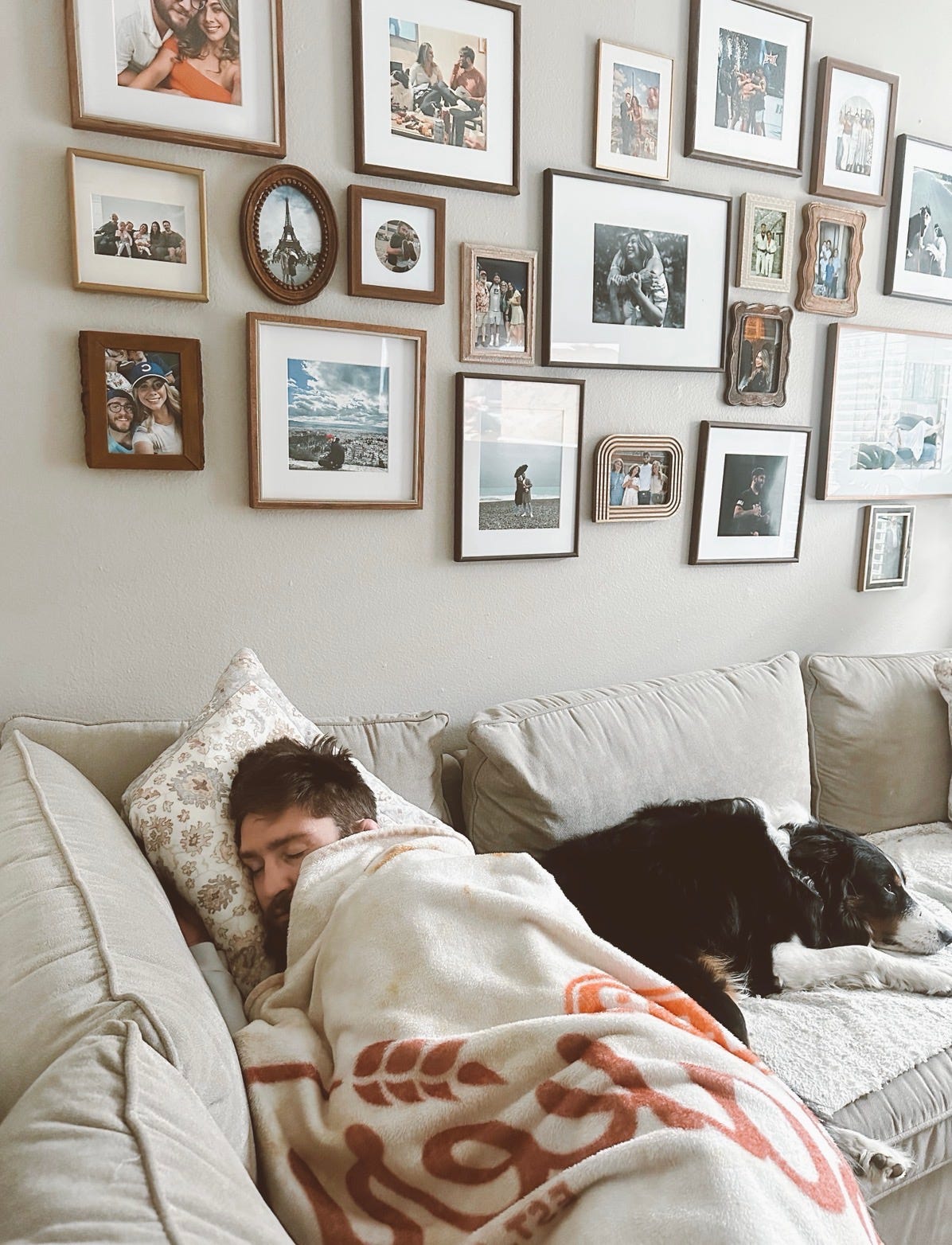
Sometimes, I imagine a future version of myself who’s completely “chill”.
He’s like the version of me in this picture.
He doesn’t worry about anything. He doesn’t get stressed. He never struggles with his sleep or worries about money or asks himself if he’s “got what it takes”.
He’s the ideal expression of the man I ought to be. I love the idea of this man.
But I also hate him.
I don’t think I want to be completely “chill”.
The chill version of myself has no ambition. He doesn’t take risks. He’s playing it safe. He’s content, and because of that, he’s nothing. He fades into oblivion.
He’s not a good writer. He doesn’t live an interesting life. He doesn’t ruthlessly audit his life and try to improve it
He gives up when it’s a good idea to. He works just enough. He doesn’t drink too much caffeine.
His life is full of order. His office is cleaner than mine. He reads casually. He probably writes some digital marketing shit with AI.
He sucks.
It’s not that I’m great now or perfect now, but at least I’m trying.
I want to be the ideal version of me, but I also don’t.
What the hell is wrong with me?
What is wrong with us, people who write?
The tortured artist trope.
The tortured artist trope isn’t very fun, but it’s so common (and it’s even been studied in academia) that we have to admit that there’s some truth in it.
Recently, I was listening to a lecture about American culture and drinking, and it discussed writers and their struggle with alcoholism. I don’t personally struggle with alcoholism, thankfully, but it is something that my family has struggled with over the years. Every time I drink, I do it fully aware that more is not going to make me better.
Some incredible work has been produced by writers who don’t even remember writing it. An example of this is Cujo, by Stephen King. Another is Naked Lunch by William Burroughs.
Another example of a book produced in a drug-induced frenzy is On the Road by Jack Kerouac, though Kerouac claims to at least remember producing the novel.
Tons of great writing (American and abroad) have been produced in drug and alcohol fueled efforts.
But it’s not even just drugs and alcohol. In many cases, it’s just pain that powers great work.
JK Rowling famously wrote the first Harry Potter book on napkins while on a train between London and Manchester. She was on the dow at the time.
People who are struggling are often compelled to do things, and sometimes, these things are great.
But does this mean that you need pain?
It’s hard to say.
Like most things, you require balance.
I always joke that a balanced approach to anything in life will never catch on.
In a world that sensationalizes prodigies, extreme diets and routines, and of course,
It’s not really interesting to read the daily routine of someone who wakes up at 7 am, goes to work, does their hobby, comes home, winds down, and goes to sleep. Contentment is often viewed as the enemy of the ambitious mind.
And yet at the same time, many of the best writers in history attribute their success to consistency, hard work, and discipline. They attribute their best work to things that are byproducts of stability.
I’ve found this to be the case myself.
When I’m traveling the world, doing exciting Jiu-Jitsu tournaments, and out of my routine, my work suffers. Recently, I’ve been proud of a lot of the work I’ve put out both on this newsletter and my others, and the real key has been a predictable routine.
I wake up every morning and write for 2 hours. I read nonfiction in the afternoon. I walk our dogs, and while I do it, I think a lot. I text ideas to myself. I write to-do lists. I eat healthy.
But here’s the kicker, I think:
After a while, routines get dull. You get bored with doing the same thing every day. It’s not so interesting.
You need inspiration. A spark.
You need to break character and break your routine and enjoy a bit of that “chaos”. Find a story worth telling.
And after that, it’s back to the discipline.
Closing Thoughts
A writer’s life isn’t for everyone.
At times, I wonder if it’s even for me.
But I guess that’s kind of the point. To write well, you need some melodrama, some magic, and some spark, but you also need the grit and discipline of being trapped at your desk and forcing yourself to pull some magic out of your booty.
You need the long writing sessions that lead nowhere and the walks afterward where the ideas hit you. You need to read fiction and nonfiction.
So I guess the real point here is that being a writer isn’t just a career, it’s a lifestyle. It’s similar to being an athlete, actually, because all of your habits affect your performance in writing. Eventually, everything bleeds through.
If you drink heavily, don’t sleep, and live a crazy life, your writing will be crazy. If you’re disciplined, that will show too.
The key is to find the perfect balance that works for you.
If you love writing and want to learn how to do it better in the changing digital world, I’m in the process of building a 28-day writing “training camp” to help you learn to write more consistently, more clearly, and to share more work with the world.
This will launch this spring.
If you’re interested in learning more about how you can be a part of the first installment of this program, hit reply to this email.
Thanks for reading another edition of The Modern Writer!
If you liked this post, share it with friends! Or, give it a ❤️ so that more people can discover it on Substack :)
I’ll see you next Wednesday!